Amazon Kindle, UK


Monday, 31 May 2010

Modern Gay Mayors

Ian Campbell, an openly gay man, has just become Britain's youngest mayor. In their report of his achievement, Edge Miami offers some useful background information on the rise of gay mayors in other cities around the world (but with a distinct US bias):
Openly gay and lesbian political leaders have become more commonplace in recent years. The mayor of Paris, Bertrand Delanoë, came out in 1998--but that didn’t stop him from being elected to the office of mayor in 2001. That same year, Klaus Wowereit, the openly gay mayor of Berlin, assumed office. 
Last fall, Annise Parker made headlines as the first openly lesbian mayor of Houston, Texas. Parker joined the ranks of openly gay American mayors, including Sam Adams, the mayor of Portland, Oregon, Mark Kleinschmidt of Chapel Hill, North Carolina, and David Cicilline, the openly gay mayor of Providence, Rhode Island. 
Cambridge, Massachusetts, was an early leader in having a gay mayor, with the 1993 election of Kenneth Reeves, who went on to serve three terms. Earlier this month, Joe Mosca also joined those ranks upon being elected mayor of Sierra Madre, California; in March, openly gay Craig Lowe won the mayor’s office in Gainesville, Florida, despite repeated anti-gay leafleting campaigns that targeted him with various homophobic smears.
Enhanced by Zemanta

Thursday, 20 May 2010

Gay Popes: Julius II (r. 1503-13)

Julius 11 (1443-1513) positioned himself for high office during the reign of his uncle Sixtus IV. A lover of art, he patronized both Michelangelo and Raphael, and in 1506 he laid the foundation stone for the magnificent church of New St. Peters. However, Julius' military conquests caused friction with the king of France and the German emperor. At their behest a council met in Pisa in 151 1 to consider his deposition. Arraigned as "this sodomite, covered with shameful ulcers, who has infected the church with his corruption," Julius nonetheless managed to prevail by calling his own council, which was still in session when he died in May 1513.
 Rumors that Pope Julius II (Giuliano Della Rovere, 1443-1513) was involved in numerous homosexual liaisons are reported both in Protestant polemical tracts and in official reports submitted by ambassadors from friendly Catholic powers. Although the Protestant sources must be regarded as inherently biased, the frequency of these accounts suggests that they may be accurate. Julius's enthusiastic patronage of Michelangelo's homoerotic depictions of the male figure also indicates that he may have fully appreciated the physical beauties of men.
Appointed Cardinal in 1471 by his uncle, Sixtus IV, Della Rovere revealed great diplomatic skill in his negotiations with various European powers. As Pope, Julius acted as a very effective general for the papal armies, and, by 1508, he recaptured the Italian region of Romagna for the Papal States. Through his patronage of various artistic projects, Julius hoped that Catholic Rome would regain and even surpass the splendor of the city at the height of the Roman Empire.
As part of his renovation of the fabric of the city, Julius ordered in 1506 that the Early Christian Basilica of Saint Peter's be demolished and replaced by a new structure, designed by Donato Bramante (1444-1516), who was the first Renaissance architect to create structures with the sense of weight and strong physical presence of ancient Roman monuments. Bramante's Tempietto (1502, Rome) had been the first Renaissance structure to employ ancient architectural orders in a correct fashion. For Saint Peter's, Bramante envisioned an immense centralized structure with a Greek cross plan. Among the elements based on ancient prototypes was the saucer dome, inspired by the Pantheon, Rome (118-25).
When he undertook the construction of the New Saint Peter's, Julius resolved that his tomb would be placed directly underneath the central dome. Michelangelo (1475-1564) envisioned a monumental funerary structure with three stories, decorated with forty-seven life-size statues. Constant changes in plans, required first by Julius and subsequently by his heirs as well as by successive popes who did not want his monument to detract from theirs, were among the many factors that inhibited the realization of the original plans. However, Michelangelo had begun by 1513 the heroic, muscular figure of Moses, which was incorporated into the truncated version of the monument assembled in San Pietro in Vincoli, Rome, in 1545. Of uncertain meaning, sensuous nude figures, the Rebellious Captive and Dying Captive (1513-19, both Louvre, Paris), also were created for the tomb.

By the end of 1506, Julius compelled Michelangelo to undertake the Sistine Ceiling, even though the artist did not believe that he had sufficient talent to complete this project. Over the next two years, the final program for the ceiling was developed through often heated negotiations between the Pope and the artist. The nine narrative scenes down the center of the ceiling narrate the history of creation, the fall of the human race through original sin, and the establishment of a Covenant between God and the Chosen People, led by Noah. These panels are displayed in a fictive stone framework, which seems to have the weight of Bramante's actual structures. The figures became increasingly large in size, heroic in musculature, and dynamic in movement as work progressed from the chronologically later scenes of Noah toward the initial stages of Creation. Located approximately in the middle of the ceiling, the Creation of Adam visualizes a balance between human potential and divine power.
The program also includes enthroned figures of sibyls and prophets to the sides of the narrative panels. Sensual nude male figures are seated at the corners of the five smaller narrative panels. The meaning of these nudes is uncertain, but their homoerotic qualities cannot be denied. Insignia of the Pope's family, including oak leaves and acorns, are displayed throughout the ceiling.

Wednesday, 5 May 2010

Del Martin & Phyllis Lyon

Del Martin 
 
b. May 5, 1921
d. August 27, 2008
 
Phyllis Lyon 
 
b. November 10, 1924

"Two extraordinary people ... that have spent the greater part of a half century ... fighting for their right to live the way so many of us, frankly, take for granted."
 San Francisco Mayor Gavin Newsom


Del Martin and Phyllis Lyon founded the first lesbian organization in the United States and have fought for more than 50 years for the rights of lesbians and gays. On June 16, 2008, Martin and Lyon became the first gay couple to be legally married in California.

Martin and Lyon both earned degrees in journalism. While working as journalists in Seattle, the two became romantically involved. The couple relocated to San Francisco and moved in together on Valentine’s Day 1953.

In 1955, finding it hard to develop a social network in San Francisco, Martin, Lyon and a small group of women founded the first lesbian organization, called the Daughters of Bilitis. The name was inspired by Pierre Louys’s “Songs of Bilitis,” a collection of poems celebrating lesbian sexuality.

Though it was intended to be a secret society, Martin and Lyon wanted to make the Daughters of Bilitis more visible. The group began publishing a monthly magazine, called The Ladder, which was the first-ever lesbian publication. As editors of the magazine, they capitalized the word “lesbian” every time it appeared.

In 1964, while fighting to change California sex laws criminalizing homosexuals, the couple joined religious and gay community leaders to form the Council on Religion and the Homosexual (CRH). This organization was at the forefront of the movement to gain religious support on gay rights issues. Both women served on the founding CRH board of directors.

In 2004, when gay marriage was offered in San Francisco, Martin and Lyon were the first to wed. A California appellate court ruling subsequently invalidated their marriage. Then in May 2008, a California Supreme Court decision provided same-sex couples the right to marry. On June 16, 2008, they were the first same-sex couple married in California. The wedding was officiated by San Francisco Mayor Gavin Newsom.

Martin and Lyon have published two books together, “Lesbian/Woman” (1972) and “Lesbian Love and Liberation” (1973). On their 50th anniversary, the documentary “No Secret Anymore: The Times of Del Martin and Phyllis Lyon” premiered. In 2005, the National Gay and Lesbian Journalists Association inducted Martin and Lyon into the LGBT Journalists Hall of Fame for their pioneering work on The Ladder. In 2007, they received the 2007 Gay and Lesbian Alliance Against Defamation (GLAAD) Pioneer Award.

Bibliography
Del Martin & Phyllis Lyon.” (The Lesbian, Gay, Bisexual and Transgender Religious Archives Network).

Kornblum, Janet. “Gay Activists Blaze Trail for half century.”  USA Today. March 4, 2004


Streitmatter, Rodger.  “Phyllis Lyon & Del Martin.”  National Lesbian & Gay Journalists Association: LGBT Journalists Hall of Fame.  June 5, 2008

Articles
Gordon, Rachel. “Lesbian Pioneer Activists See Wish Fulfilled.” San Francisco Chronicle. June 16, 2008

Marshall, Carolyn. “Dozens of Gay Couples Marry in San Francisco Ceremonies.” The New York Times. February 13, 2004

McKinley, Jesse. “Same-Sex Marriages Begin in California.” The New York Times. June 17, 2008

Books
Lesbian love and liberation (The Yes book of sex) (1973)
Battered Wives (1976)

Other Resources


Enhanced by Zemanta

Monday, 29 March 2010

Natural Law, Natural Families: Acquiring Manly Virtue

Gay men in the modern Western world are accustomed to accusations a homoerotic orientation is seen as effeminate, sissyish. This is a complete myth, as is easily shown by the many counterexamples from the butch, bear and leather-oriented sub-groups that co-exist with the more camp and drag groups. The words "gay male" cover an astonishing degree of diversity. Still, stereotypes persist. Sometimes, though, they are not what we would expect.
In classical Greece and in Tokugawa Japan, same sex lovers were especially associated with courage and with military prowess. Elsewhere, the important virtues of "courage, proficiency in hunting, and the ability to dominate women" were so closely identified with masculinity that they were routinely passed on to young boys in the most direct way possible - by direct transfer from older males to younger in pure male essence - in semen, by anal or oral sexual intercourse.


This is from David F Greenberg , "The Construction of Homosexuality":
“The homosexual practices are justified by the belief that a boy will not mature physically unless semen is implanted in his body by an adult. Valued male qualities, such as courage, proficiency in hunting, and the ability to dominate women, are transmitted in the same way. Repeated intercourse builds up a supply of the vital substance in the boy’s body.”
But, says Greenberg, intercourse with women is believed to be debilitating. While this pattern of childhood homosexuality is found in a minority of Guinean societies, where it was recorded, it was obligatory for all. From a remarkably early age (sometimes as young as seven, sometimes ten or twelve), boys learnt to accept the all-important semen from an older age group. As they matured, these boys in turn would pass on their own semen to those younger than they. Not until they were fully mature were they permitted intercourse with women – by which time, presumably they were strong enough to withstand the debilitating effects of the experience.

The semen was transmitted in different ways: sometimes by anal intercourse, sometimes orally – or even by insertion into special incisions in the skin. In these cases, the semen was obtained from the older men, following special ritual intercourse with women.

The practice of passing on of manly virtue or other skills by donating semen was not restricted to New Guinea, although it was most widely studied and recorded there. In some Australian aboriginal groups, such as the Bora of the Kimberley region, drinking semen formed a part of intitiation rites. In Brazil, apprentice healers learned their skills from older, experienced healers - and did so by "sexual communication". In parts of northern Morocco, an important skill for young boys was the ability to learn the Koran, but they believed this was impossible until they had first been penetrated. The ability to learn the Koran was passed on to the new generation in the semen of their elders. 

So - who's the sissy, then?
See also:
Books:

Naphy, William: Born to be Gay

Greenberg, David F: The Construction of Homosexuality

Herdt, Gilbert H: Same Sex, Different Cultures

Murray, Stephen O: Homosexualities

Friday, 12 March 2010

Epimondas: Gay Military Hero, Democrat, Cultured Statesman


Epaminondas lived before the Christian era, outside the Jewish tradition, and has no claim whatsoever to be treated as a “saints in any literal sense. However, taking the term much more loosely, including those we might consider as role models, he clearly fits the bill. If that doesn’t suit you, think of him as included in the “others” of my title.
Together with his lover Pelopidas, Epaminondas was one of the celebrated “Sacred Band of Thebes”, a military company of 150 pairs of lovers. That’s right, an army band where it was compulsory to be gay – and partnered. We usually think of the Spartans as the most military of the Greek cities, and with good reason. While Athens (and some other cities following them) valued democracy, philosophy and intellectual life generally, young Spartans were educated for one thing only – war. After Sparta had convincingly beaten Athens and her allies in the Peloponnesian War, the victors extinguished democracy in the vanquished cities, and placed their allies in command as local despots.
In the case of Thebes, they met strong resistance from the defenders of democracy, in the form of the band of male lovers. Founded initially by Georgidas, on the principle that men never fight more bravely than when fighting to protect and support their loved ones alongside them, the founding proposition was soon confirmed. In their first engagement with the Spartan enemy, victors in the recent Peloponnesian war, the new company of Theban lovers overcame a Spartan army of two to three times their number, and were able to reinstate democracy in their city.
Epaminondaswas initially somewhat hidden in the shadow of his friend Pelopidas, who succeeded Georgidas as leader just a year after the band was founded. Together, they won many famous victories. Later, overshadowing his friend, he found the more enduring fame, and for many notable qualities beyond his illustrious military career.
After assisting in the re-establishment of democracy in Thebes, he developed a career as an orator and statesman as well as a soldier. Although he was instrumental in defeating Sparta in establishing Thebes as the dominant geek power, he refused to use this power to to subject other cities to Theban domination and pillage, so that he was known as a military liberator, not a conqueror. Many scholars have described him as Greece’s greatest warrior-statesman. Diodorus Siculus wrote that he excelled all the others in valour and military shrewdness – but also in “eloquence of speech, elevation of mind, contempt of lucre, and fairness…”.
The Romans also admired him, although less enthusiastic about his cultural achievements. Cornelius Nepos included him in his Book o Great Commanders, but found it necessary to excuse his reputation as a musician and dancer on the grounds that the Greeks had a fondness for these pursuits. He “praises without reservation Epaminondas’ intellectual and athletic prowess, and finds he meets roman standards of temperance, prudence and seriousness….. and was such a lover of truth that he never lied, even in jest.” .
He died in 362, in a battle which once again defeated the Spartans, but also ended Epaminondas’ own life.
This could be my kind of guy – accomplished, virtuous, a democrat and liberator – and good-looking. Except that he lived about two millennia too soon, he could easily be seen as a great Renaissance man. My only objection? Surely he’s just too good to be true. Yet this is the picture that comes down to us from the ancients.
And to think that men of this calibre are not permitted to serve openly in the US army.
(Source: The material above condenses a passage from “Homosexuality & Civilization” by Louis Crompton, which makes an excellent and stimulating introduction to the history of homosexuality.)

Thursday, 11 March 2010

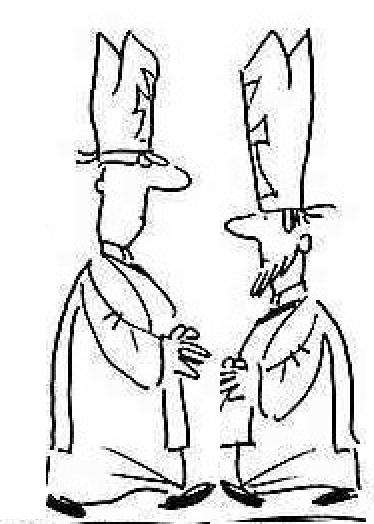
Gay Bishops: Ralph of Tours (promiscuous, gay) and John of Orleans

In  1098!

With all the current fuss about the decision of the US Episcopal Church to consecrate openly gay bishops, and the Catholic Church's declared hostility to gay priests and to gay marriage or even civil unions, we forget that in the older history of the church, it is not gay priests and bishops that are new, or gay marriage, but the opposition to them.  Many medieval and classical scholars have produced abundant evidence of clearly homosexual clergy, bishops, and even saints, and of church recognition of same sex unions.
gay bishops

Wednesday, 10 March 2010

Gays in the Military: Japan

Now that DADT is finally under serious review, it is once again appropriate to consider how other military regimens deal or have dealt with with their queer members – or aspirant members.
As I have noted before, across the EU this is simply not a question at issue.  Gay men and lesbians serve routinely, just as any other servicemen and women. Here in the UK, every July some members routinely join the annual “London Pride” through the streets of London, either in uniform, in military squads, or as individuals in other groups of specific (non- military) interest. In South Africa, the constitution’s non-discrimination clause guarantees that sexual minorities should be able to serve on the same basis as anyone else. Last month, I was intrigued by this report from Peter Toscano, telling of a South African soldier who faced a gender identity issue by transitioning – and the military authorities provided a female officer as mentor and support to help her through the process.
In European history, gay soldiers were prominent in the Greek armies: notably in the Sacred Band of Thebes and its pairs of lovers (where only gay lovers were admitted), but also in other Greek fighting forces, where they were often crucial in creating or defending democracy.
Today, I want to discuss another renowned military culture with a strong homoerotic tradition – the Japanese shoguns and samurai.
[


Samurai and Shoguns

For centuries, love and sex between men have been recorded and celebrated at the highest levels of Japanese society, including several emperors, and have especially associated with the military establishment and with the monasteries.
Back in the 12th century, the Japanese Emperor Go- Shirakawa (1156 – 1158), who was a devout Buddhist, fell in love with Fujiwara Nobuori. Then, in 1192,a later emperor Go-Shu named Minamoto Yoritomo as his military commander – i.e. “shogun”, who came to act in the name of the emperor. Yoritomo took as a lover a young officer, Yoshino.
Many succeeding shoguns followed this example, taking as lovers apprentice warriors known as “wakashu”, giving rise to the name for this type of relationship: “wakashudo”. The name given to the younger warrior lovers in these relationships were known as “gomotsu”:
“most of those who storm the battlefield, warding off the enemy and accompanying their lords to the end, are the lords’ male sex-partners.” (p 421)
“As in ancient Greece, Japanese culture idealised shudo as a source of morality and military courage.”
“In our empire of Japan, this way flourished from the time of the great Master Kobo particularly. And in the abbeys of Kyoto and Kamakura, and in the world of the nobles and the warriors, lovers would swear perfect and eternal love …..whether their partners were noble or common, rich or poor, was absolutely of no importance.
During the Ashikaga shogunate, (1338 – 2573), 6 shoguns out of 15 are known to have had wakashu lovers. Add in the succeeding Tokugawa shoguns (1573 - 1837), “at least half” of all shoguns had male love affairs.
eg. Yoshimochi, the fourth Ashikaga shogun (1395 -1428) loved a young samurai Akamatsu Mochisada, to whom he granted three provinces, simply for homosexual favour.
Yoshinori (1429 –1441 ) was a Buddhist monk from age 10 until he became shogun at 35. He invited temple entertainers to share his bed, and planned to bestow three provinces on a young man who tad taken his fancy – but this led to his death.