Amazon Kindle, UK


Showing posts with label musicians. Show all posts

Tuesday, 6 November 2012

Pyotr Ilyich Tchaikovsky, Composer

b. May 7, 1840
d.
November 6, 1893

"Music’s triumphant power lies in the fact that it reveals to us beauties we find in no other sphere."
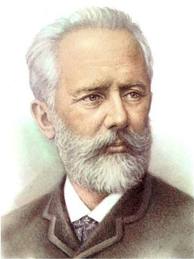
Pyotr Ilyich Tchaikovsky is one of the most popular composers in history. His best-known works include the ballets "Swan Lake," "The Sleeping Beauty," and "The Nutcracker";  the operas "The Queen of Spades" and "Eugene Onegin"; and the widely recognized Fantasy Overture “Romeo and Juliet" and "1812 Overture."
Tchaikovsky was born in Votinsk, Russia, a small industrial town. His father was a mine inspector. His mother, who was of French and Russian heritage, strongly influenced his education and cultural upbringing.
At age 5, Tchaikovsky began piano lessons. His parents nurtured his musical talents, but had a different career path in mind for their son. In 1850, the family enrolled him at the Imperial School of Jurisprudence in St. Petersburg, where he prepared for a job in civil service.
After working in government for a few years, Tchaikovsky pursued his passion at the St. Petersburg Conservatory. After graduation, he taught music theory at the Moscow Conservatory and worked on new compositions. Tchaikovsky created concertos, symphonies, ballets, chamber music, and concert and theatrical pieces. His passionate, emotional compositions represented a departure from traditional Russian music, and his work became popular with Western audiences.
Despite his career success, Tchaikovsky’s personal life was filled with crises and bouts of depression. After receiving letters of admiration from a former student, Tchaikovsky married her. Historians speculate the marriage took place to dispel rumors that Tchaikovsky was gay. The marriage was a disaster and Tchaikovsky left his wife after nine days.
Tchaikovsky began an unconventional relationship with a wealthy widow, Nadezhda von Mek, who agreed to be his benefactor on one condition: they were never to meet face to face. The couple exchanged more than 1,000 letters, until von Mek abruptly ended their 13-year liaison.
The famed composer died suddenly at age 53. The cause of his death, believed by some to be suicide, remains a mystery.


Bibliography
“Pyotr Ilyich Tchaikovsky: Biography.” Answers.com. 9 June 2010.
"Pyotr Ilyich Tchaikovsky.” Wikipedia, the free encyclopedia. 9 June 2010.
“Tchaikovsky, Pyotr Ilyich." glbtq.com. 9 June 2010.


Videos of Pyotr Ilyich Tchaikovsky
Swan Lake by Kirove Ballet
The Nutcracker Ballet
Sleeping Beauty Ballet


Websites
Pyotr Ilyich Tchaikovsky: Classical Composers Database
Classical Net: Pyotr Ilyich Tchaikovsky
Last.fm: Pyotr Ilyich Tchaikovsky
Naxos Classical Music: Pyotr Ilyich Tchaikovsky 
Enhanced by Zemanta

Monday, 5 November 2012

Vladimir Horowitz (1903 - 1989 ) Russian Pianist

b. 1st October 1903
d. 5th November 1989

There are three kinds of pianists: Jewish pianists, homosexual pianists, and bad pianists

A legendary pianist, whose artistry, preserved on recordings, remains a source of inspiration for generations of pianists, a delight for listeners, and a constant subject of academic inquiry. Although he married, among his own circle, he was well known to be homosexual.Later in life, he underwent psychiatric treatment in an unsuccessful attempt to cure his orientation.


Born in Kiev of Jewish parents, he started piano lessons at an early age. He entered the Moscow conservatoire in 1912, and gave his first public recital in 1920 - still in his teens. As his fame grew, he determined to make his career in the West, and in In December 1925, Horowitz crossed the border into the West, ostensibly to study with Artur Schnabel, but he had stuffed American dollars and British pound notes into his shoes, to finance his plan not to return. Successful debuts in Berlin, Hamburg, Paris, Rome, and London followed in 1926. To facilitate his burgeoning international career, he accepted honorary citizenship of Haiti.

He made his US debut, and also his first American recordings, in 1928. A long and glittering career, in international concert halls and recording studios, followed, as did numerous honours and awards. By 1945, he had become a citizen of the United States.

The story of his homosexuality bears remarkable similarities to that of Leonard Bernstein's. In his youth, he was widely assumed by his friends and associates that he was homosexual. In Berlin, for instance, he hired a young personal assistant, who accompanied him in all his travels, including vacation trips. It is often assumed that the relationship, which lasted six years, was not simply professional. Then, in 1933, he married the daughter of the conductor Arturo Toscanini, with whom he had a strong association.

It is believed that he continued to have some homosexual encounters during his marriage, but attempted to resist these temptations, receiving psychiatric treatment in the 1940's from Lawrence Kubie, a psychiatrist who specialized in "curing" homosexuals (Among his other patients were Moss Hart and, later, Tennessee Williams).

In 1949, he left his wife for a period of four years, but later returned to her. Although he flatly denied that he was gay, there was a widespread belief to the contrary. Arthur Rubinstein said of Horowitz that "Everyone knew and accepted him as a homosexual." Later, when he seemed to have become more relaxed about his sexuality, he was sometimes seen in New York's gay bars and disco's. His colleague David Dubal observed that late in his life, in his eighties, although at that time there was no evidence that he was sexually active, it was evident that he had a powerful interest and attraction to the male body. That interest,Dubal believed, had been sublimated into an intensely powerful undercurrent of eroticism in his playing.

Monday, 16 May 2011

Wladziu Valentino Liberace U.S.A., Pianist, showman

b. May 16, 1919
d. February 4, 1987


Born of Italian and Polish ancestry in West Allis, Wisconsin, Wladziu Valentino Liberace (called also Lee, or Walter Valentino) became one of the most popular and controversial entertainers of the 1950s and 1960s. With the advent of television, his career skyrocketed; and during the early 1950s, The Liberace Show was watched by more than 35 million people each week. His television exposure led to one of the most lucrative concert, nightclub, and recording careers in history.

For 3 years he had a relationship with his chauffeur/assistant, Scott Thorson. Despite ongoing rumors and accusations, and a palimony suit brought against him by Scott in 1982, Liberace continued to deny that he was homosexual. In 1978 The Liberace Museum in Las Vegas, Nevada, was opened. His last performance was at Radio City Music Hall, New York, on November 2, 1986. Liberace died in Palm Springs, California, for Aids-related complications.

Ronnie Tober (left) with Liberace (right)

TV:
The Liberace show (1952-)
Films:
South Sea Sinner (1950)
Sincerely Yours (1955)

Website


Books:

Liberace (1972, autobiography)
The Things I Love (1976)
Darden Asbury Pyron, Liberace: An American Boy

Source:

Matt & Andrej Koymasky Living Room, LGBT Biographies.com